A fast rising robotics and artificial intelligence startup called Physical Intelligence is once again in the spotlight after releasing new research that could reshape how robots learn and perform real world tasks.
The San Francisco based company, which has quietly become one of the most closely watched AI startups in the Bay Area, published findings on Thursday showing that its latest model can successfully guide robots to complete tasks they were never directly trained to perform.
This is a major step forward in robotics AI and could point toward a future where robots are no longer limited to strict programming or narrow training data.
🤖 A New Robot Model That Can Think Beyond Training Data
The new system, called π0.7, is designed to push robotics closer to what researchers describe as a general purpose robot brain.
In simple terms, instead of training robots for one specific task at a time, this model can combine different learned skills and apply them to new situations it has never seen before.
This ability is known as compositional generalization, meaning the robot can remix knowledge from different experiences to solve unfamiliar problems.
Until now, most robotics systems have worked in a very rigid way. Developers collect data for a specific task, train a model for that task, and repeat the process for every new job. π0.7 attempts to break away from that pattern.
🧠 Why Researchers Are Excited
According to Sergey Levine, co founder of Physical Intelligence and a professor at UC Berkeley, this shift could unlock exponential improvements in robot performance.
He explained that once robots move beyond memorizing tasks and start recombining skills, their capabilities begin to scale much faster than expected, similar to what happened with language models and vision AI systems.
In other words, instead of improving step by step, the system starts improving in leaps.
🍳 Real World Test Using an Air Fryer
One of the most interesting demonstrations in the research involved an air fryer.
The robot had almost no direct training on this appliance. Researchers found only a couple of weak examples in the entire dataset, including one where a robot simply closed an air fryer and another where a different robot placed an object inside it.
Despite this limited exposure, the model was still able to figure out how to interact with the appliance and attempt a cooking task involving a sweet potato.
At first, it struggled. But when researchers gave it step by step verbal instructions, similar to guiding a new employee, the robot successfully completed the task.
This suggests that future robots may not need full retraining for every new environment. Instead, they could learn in real time through human instruction.
🗣️ Why Human Guidance Still Matters
One of the key findings is that performance improves significantly when humans communicate tasks more clearly to the model.
Researchers admitted that even prompt design plays a big role in success rates.
In one case, success improved from about 5 percent to 95 percent after refining instructions for the same task.
This shows that robotics AI is not just about hardware or data, but also about how humans interact with machines in real time.
🏠 From Coffee Making to Laundry Folding
The research team compared π0.7 against older specialist robotics models that were trained for individual tasks.
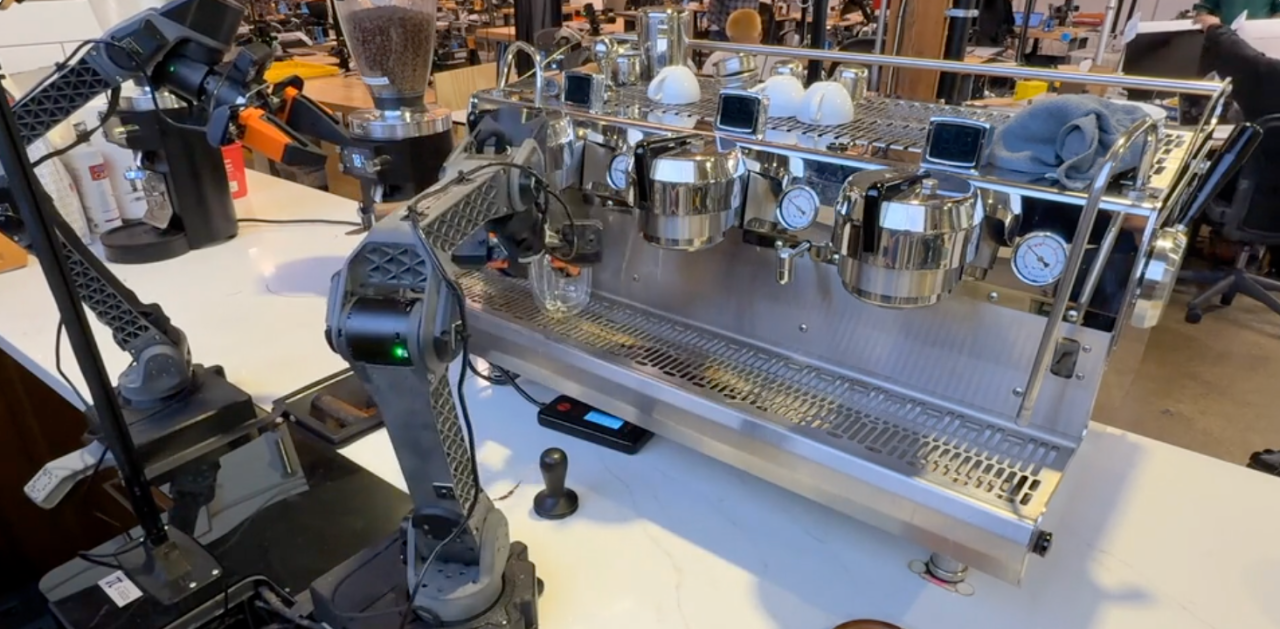
They found that the general purpose model performed similarly across several complex household and workplace tasks such as making coffee, folding clothes, and assembling boxes.
While the system is still early and not perfect, it shows signs of moving toward more flexible real world intelligence.
⚠️ Limitations Still Remain
Despite the excitement, the researchers are careful not to overstate progress.
The system is not yet capable of handling complex multi step instructions on its own. For example, a simple command like “make toast” still requires step by step guidance.
There is also a major challenge in robotics research: there are no widely accepted benchmarks to properly measure performance. This makes independent verification of results more difficult.
Instead, performance is often compared against internal baseline models rather than global standards.
💰 Investor Confidence Keeps Growing
Even with these limitations, investor interest in the company continues to rise sharply.
Physical Intelligence has already raised over 1 billion dollars and is currently valued at around 5.6 billion dollars.
The company was co founded with backing from prominent Silicon Valley investor Lachy Groom, who previously supported major startups like Figma, Notion, and Ramp.
Now, reports suggest the startup is in discussions for a new funding round that could nearly double its valuation to around 11 billion dollars.
🌍 Why This Matters for the Future of Robotics
This development is important because it signals a shift in how robots may work in the future.
Instead of being limited to factories or repetitive industrial tasks, robots could eventually become flexible assistants capable of adapting to new environments quickly.
If systems like π0.7 continue to improve, robotics could move closer to the same type of rapid progress seen in large language models.
🔥 Final Takeaway
The work coming out of Physical Intelligence suggests that robotics is entering a new phase.
The idea of a robot that can learn, adapt, and respond to natural instructions is no longer science fiction. It is becoming an active research direction backed by billions of dollars in investment.
While the technology is still early and imperfect, the direction is clear.
Robots are slowly moving from being pre programmed machines to adaptable intelligent systems that can learn on the fly.